Logo
 Learningtech.org
  The Miller Institute
 for Learning with Technology

E-Rate Consulting

What is E-Rate?

"E-Rate" is a commonly used term to refer to the U.S. Federal government's "Universal Service" program, which provides substantial discounts on telecommunications, Internet and technology products and services for schools and libraries.

For more details, check out one of our presentations:

Who is Eligible?

All K-12 schools and libraries unless for-profit or with a >$50M endowment. A properly prepared application is good for a minimum 20% discount, even for well-do-to schools. Your discount level is derived from your free/reduced lunch percentage, with 0% free/reduced lunch qualifying for 20% discount, up to a maximum of 90% discount.

How Much Funding can I Request?

There are 2 levels of funding available and different criteria for each level.

1. Priority 1 Services -- All telecommunications and Internet access including hosting (no longer requires a tech plan)
2. Priority 2 Services -- Internal Connections (cabling, network equipment) and Basic Maintenance of Internal Connections
- Requires a tech plan
- Usually available only to the highest discount schools (at least 50% Free/Reduced Lunch)
- Internal Connections can be done twice out of every five years

There is NO upper bound on the amount requested, but your plan must show that you are ready to pay for your share plus corresponding ineligible but necessary costs such as proper power for the equipment acquired and staff development for teachers.

How do I Apply?

We affectionally describe E-Rate as a "12 step program." Some steps are non-trivial and require significant follow-through. For example, your technology plan (required except for basic telephone service) must exist at the time you BEGIN the process. However, the plan needs to be at LEAST county-certified and ideally state-certified, which offers more funding opportunities, later (typically before July 1) in the process. The whole process is complex and can be prone to seemingly minor yet irreversible errors; so consider using a consultant. Please be sure that your consultant does not have inappropriate relationships with the service providers bidding on your projects, since that creates a conflict of interest and jeopardizes your funding.

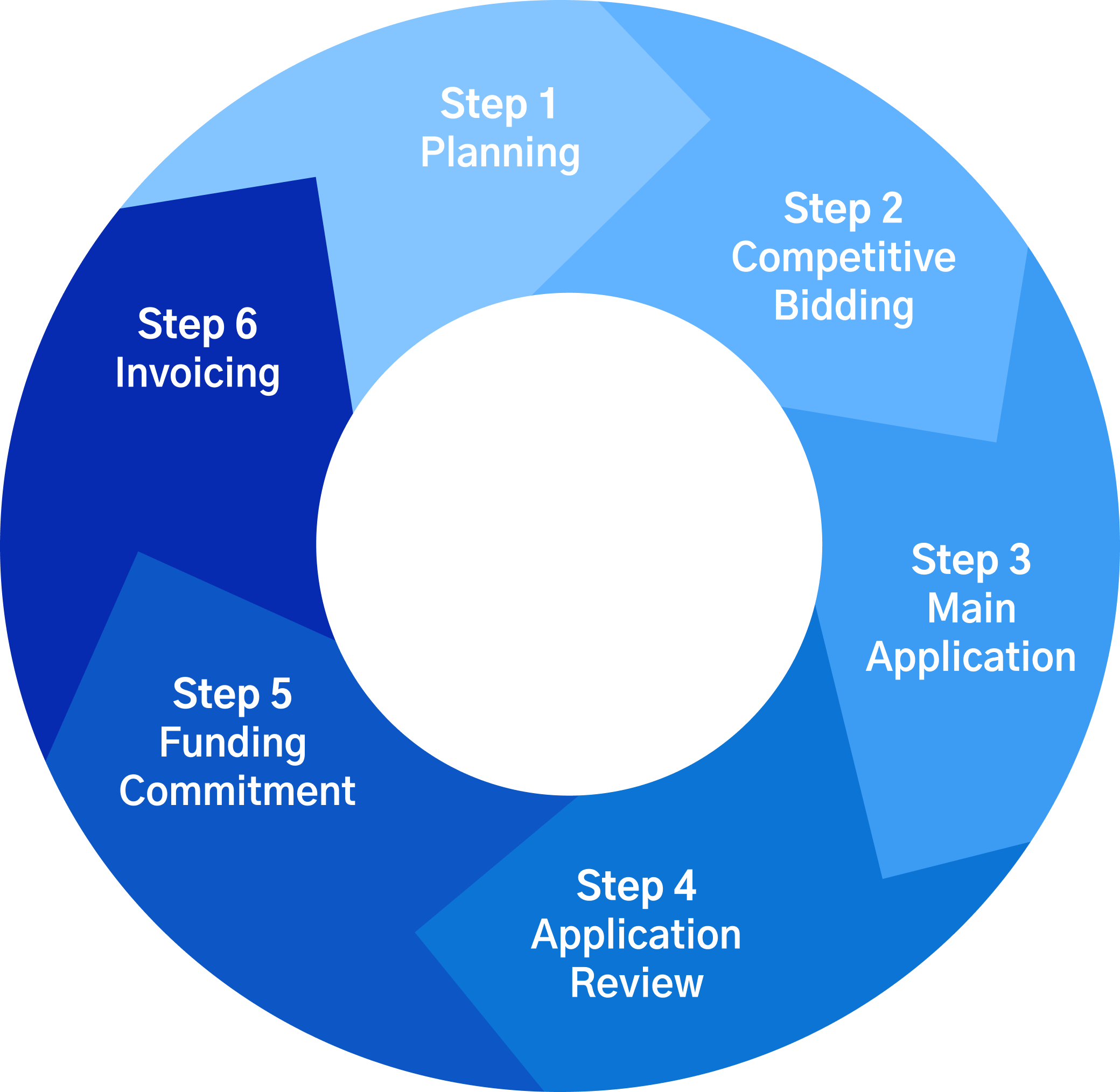
The 12 step process of E-Rate
  1. Determine Eligibility (Summer, 1 Year Before Funding)
  2. Develop a Technology Plan (Summer, 1 Year Before Funding, at least a Draft)
  3. Open a Competitive Bidding Process (Fall of Year Before)
  4. Select a Service Provider (Fall/Winter of Year Before)
  5. Calculate the Discount Level (Based on Free/Reduced Lunch as of P1 report)
  6. Determine Your Eligible Services (January-February)
  7. Submit Your Application for Program Support (January-February)
  8. Undergo Application Review (Spring)
  9. Receive Your Funding Decision (Hopefully Summer of Funding Year)
  10. Begin Receipt of Services (July 1)
  11. Invoice USAC (Ongoing)
  12. Start Next Application Cycle (overlaps)

Where I can Learn More?

There are many sources of information about this program on the Internet. The definitive source is the USAC Schools and Libraries web site, which describes E-Rate and provides detailed information and the latest news.

You can find out even more details in one of these comprehensive, updated presentations by LearningTech founder Mark Miller: Oregon E-Rate Presentation or Arizona E-Rate Presentation.

Click here to send us an email.

How Does The Miller Institute Help Schools and Libraries with E-Rate?

The Miller Institute for Learning with Technology is committed to assisting educational institutions in gaining access to the necessary resources for a modern network infrastructure. Therefore, we assist many of our clients with grant applications including the "E-Rate" program. The E-Rate application process is complex and can be intimidating; hence, many schools do not realize the significant discounts to which they would be entitled under this program. Unfortunately, due to the seasonal high workload and critical deadlines, we are unable to accept new E-Rate clients from November through February. Preparing a proper application requires several months, so we encourage interested schools to start early, preferably engaging our services by early summer for funding to start in the following fiscal year.

During recent years, we have helped our clients qualify for millions of dollars in Federal subsidies for technology and telecommunications through E-Rate, to the benefit of many thousands of students, often in the most impoverished neighborhoods in our communities. Our efforts typically also included the preparation of county- and state-certified Technology Plans. Certified plans are also useful in seeking other sources of funding; for example, CA's EETT Formula Grants are then automatic until the plan expires. We have also broken new ground in working with Charter Management Organizations [CMOs] in obtaining E-Rate funding for new charter schools scheduled to open during the upcoming funding year -- their first year of operation -- when funding is needed most. Our track record for successful applications, as a ratio of funds requested versus funds committed, is extremely high; and we are diligent in ensuring that committed funds are then actually realized, one area where significant funds are often lost by schools, such as by forgetting to submit key forms later in the process.

We have active projects in Arizona, California, and Louisiana; we have also done some work in Oregon. We expand our operations thoughtfully, with an emphasis on quality over quantity. We also prepare Technology Plans for schools and non-profit organizations that are not seeking E-Rate funding, along with providing many other services relating to educational technology. We will be pleased to provide detailed client references for both our current and our past E-Rate projects, to seriously interested schools, districts, libraries, and consortia, upon request.

JUMP TO SLD WEB SITE